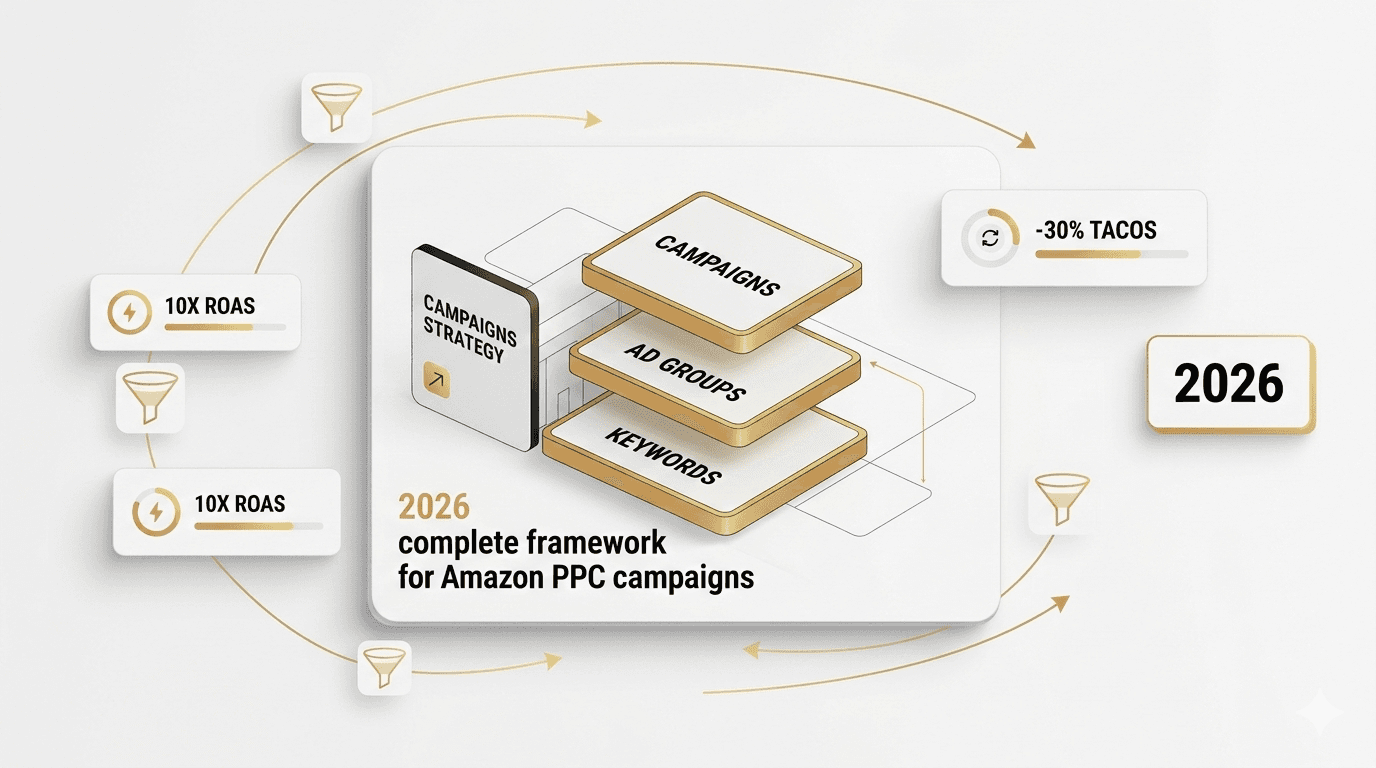
In the ever-evolving landscape of Amazon advertising in 2026, having a solid PPC campaign framework is crucial. Our complete guide to Amazon PPC campaign structure will equip you with proven strategies to optimize your ads effectively.
The Complete Framework for Amazon PPC Campaigns in 2026
Crafting an efficient Amazon PPC campaign structure is essential for standing out in the crowded marketplace of 2026. The right structure allows advertisers to target precisely, optimize budgets, and maximize returns. Typically, an effective Amazon PPC framework involves categorizing campaigns based on product types, sales objectives, and keywords. It stems from a layered approach:
Campaign Level: Setting overarching goals, such as brand awareness or direct sales.
Ad Group Level: Segmenting by product categories, target audiences, or match types.
Keyword Level: Using strategically chosen keywords to target specific search terms.
For 2026, integrating automation tools and AI-driven analytics into this framework has become standard. These tools help identify optimal bid adjustments, keyword placements, and even suggest new product targeting strategies, thus enhancing campaign performance.
How to Set Up Effective Campaigns on Amazon in 2026
Setting up a successful Amazon PPC campaign in 2026 involves combining strategic planning with cutting-edge technology. Here’s a step-by-step guide:
Define clear objectives: Are you aiming for sales, traffic, or brand recognition? Your goals influence your campaign structure.
Conduct comprehensive keyword research: Utilize AI-powered tools like Helium 10 or Jungle Scout to find high-converting keywords relevant in 2026's market.
Create targeted campaigns: Segment campaigns based on product categories or customer intent. For example, separate campaigns for cost-effective entry products and premium offerings.
Organize ad groups effectively: Within each campaign, create ad groups that target specific keyword themes or product variants.
Optimize bids and budgets: Use automation tools that adjust bids in real-time based on traffic and conversion data.
Implement tracking and analytics: Connect your campaigns with Amazon Attribution and other analytics platforms to monitor performance precisely.
In 2026, leveraging AI and machine learning capabilities for bid management and targeting will be vital to maintaining competitive edges.
Breaking Down Amazon Advertising Campaigns: Ad Groups and Keywords
Understanding the granular components of Amazon PPC campaigns—namely ad groups and keywords—is foundational. Let’s break down their roles:
Ad Groups
Ad groups are subdivisions within campaigns that help organize your targeting strategies. For example, if you sell a range of kitchen gadgets, separate ad groups for blenders, coffee makers, and air fryers allow for more precise control over bid adjustments and budget allocations.
Keywords
Keywords are the search terms shoppers enter into Amazon. Selecting the right keywords involves a mix of broad, phrase, and exact match types, tailored to your products and targeting intent. In 2026, AI-powered keyword suggestions and real-time performance data can help you refine your keyword list dynamically, reducing wasted ad spend and increasing conversions.
For instance, using highly targeted keywords like "Premium stainless steel blender" instead of generic terms increases the likelihood of reaching motivated buyers, especially when combined with ad group segmentation.
Strategies to Organize Your Amazon PPC Campaigns for Growth
Growing your Amazon PPC performance in 2026 demands organization and strategic foresight. Consider these tactics:
Segmentation by Product Lifecycle: Create separate campaigns for new products, best-sellers, and seasonal items to tailor your bidding strategies.
Geo-Targeting: Use location-based campaigns if your products perform better in certain regions or countries, leveraging Amazon’s advanced geo-targeting features.
Audience Targeting: Utilize Amazon’s customer audience insights to create campaigns targeting specific demographic groups or shopping behaviors.
Match Type Diversification: Balance your campaigns with broad, phrase, and exact match keywords to maximize reach and precision.
Automated Campaigns: Employ Amazon's auto campaigns to discover new keywords and product placements, then refine with manual campaigns for focused targeting.
Measuring Success: Analyzing Your Amazon PPC Campaign Data in 2026
Data analysis is the backbone of refining an effective Amazon PPC strategy. In 2026, the integration of AI-driven analytics platforms enhances your capacity to interpret data accurately:
Key Metrics: Track click-through rate (CTR), conversion rate, ad spend, ACoS (Advertising Cost of Sale), and ROAS (Return on Ad Spend) for each campaign and ad group.
Automated Insights: Use tools that analyze campaign data to suggest optimizations, such as bid adjustments or keyword pruning.
Trend Identification: Look for seasonal or product-specific trends, adjusting campaigns accordingly to maximize ROI.
Attribution Modeling: Leverage Amazon’s attribution data to understand the customer journey and optimize touchpoints.
Continuous Testing: Regularly A/B test ad creatives, targeting, and bidding strategies to identify what drives the best results in 2026’s dynamic market.
By combining detailed data analysis with AI-powered insights, advertisers can make informed decisions that enhance campaign performance and ROI continually.
Conclusion
Building a robust Amazon PPC campaign structure in 2026 is essential for thriving in a competitive landscape. By understanding the complete framework—ranging from campaign setup to strategic segmentation and detailed analytics—you can drive significant growth. Leveraging advanced AI tools and automation will further refine your efforts, ensuring your ads are not only visible but also converting effectively. Stay adaptable, continually analyze your data, and keep optimizing your campaign structure to stay ahead in 2026’s marketplace.