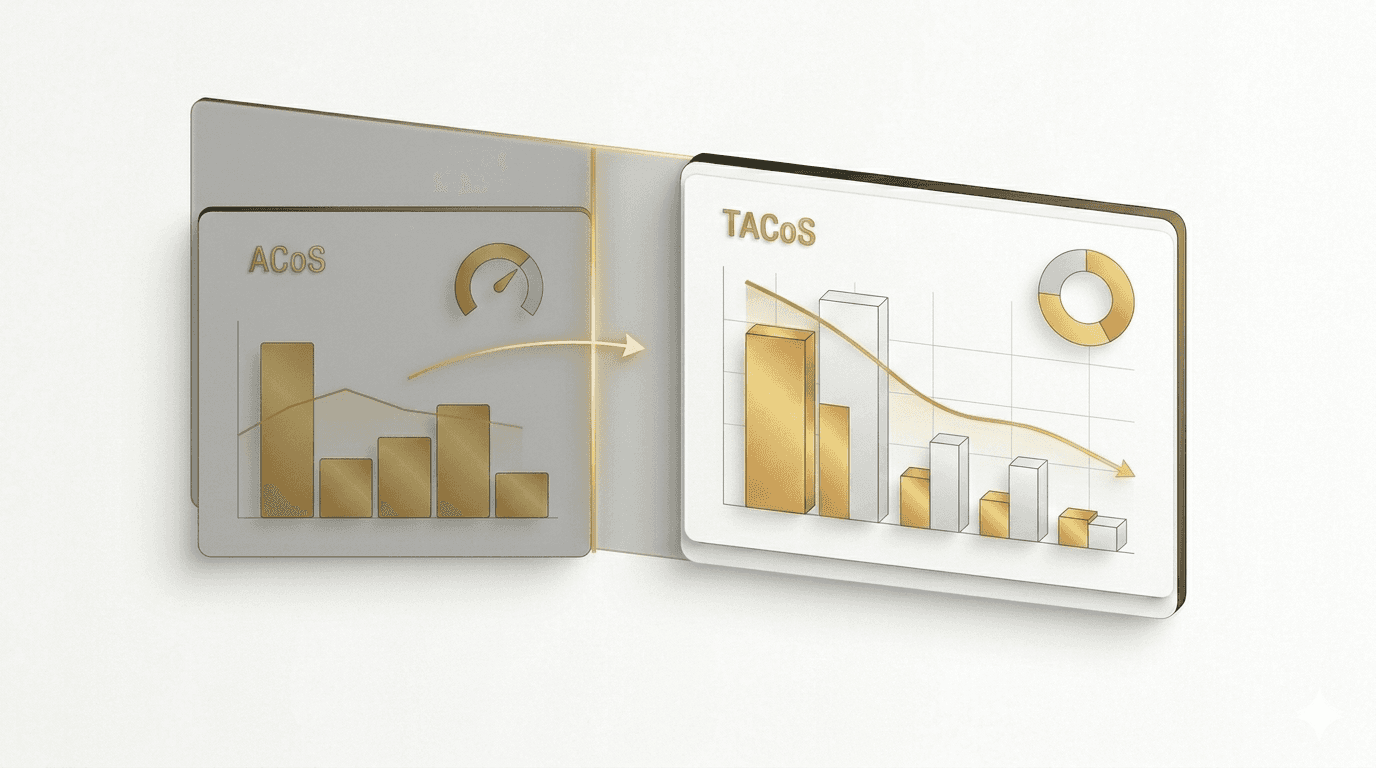
In the rapidly evolving world of Amazon advertising in 2026, understanding key metrics like TACoS and ACoS is crucial for maximizing ROI. As businesses seek more precise ways to measure ad efficiency, knowing what TACoS is and why it matters more than ACoS can give you a competitive edge.
The Evolution of Amazon Advertising Metrics in 2026
Over the past few years, Amazon advertising has shifted from simple cost-per-click (CPC) campaigns to sophisticated measurement models. In 2026, marketers are leveraging advanced analytics to get a comprehensive view of their ad performance. Early metrics like ACoS (Advertising Cost of Sales) gained popularity for tracking ad efficiency relative to sales. However, as campaigns matured and businesses focused on holistic growth, new metrics emerged to provide deeper insights—most notably TACoS (Total Advertising Cost of Sales).
This transition reflects a broader trend toward integrated marketing analytics that account not just for ad-specific expenses but also for their impact on overall sales and profitability. Consequently, understanding these evolving metrics is essential for crafting competitive strategies in today's crowded Amazon marketplace.
Defining TACoS and Its Role in Managing Ad Spend
What Is TACoS?
TACoS stands for Total Advertising Cost of Sales. Unlike ACoS, which considers only advertising expenses relative to sales generated directly from ads, TACoS includes all sales both organic and paid that arise during a specific period, providing a broader view of advertising effectiveness.
Mathematically, TACoS is calculated as:
TACoS = (Total Ad Spend) / (Total Sales)
for the relevant period. This metric captures how much of your total revenue is spent on advertising, offering insight into your overall marketing efficiency.
The Significance of TACoS in 2026
In 2026, businesses recognize that ad spend doesn’t operate in isolation. Organic sales derived from product listings, reviews, and SEO combine with paid sales to form the total revenue. TACoS reflects this reality, enabling marketers to see the bigger picture of their sales ecosystem.
For example, a company running a brand awareness campaign might see a high ACoS because their direct ad-driven sales are low. However, if their organic sales increase as a result, the TACoS might be lower and more reflective of actual marketing impact. Thus, TACoS becomes an essential metric for evaluating overall marketing efficiency and profitability.
Comparing ACoS and TACoS: Which Metric Should You Prioritize?
Understanding the Differences
While both metrics are valuable, they serve different strategic purposes:
ACoS (Advertising Cost of Sales): Focuses solely on the relationship between ad spend and sales directly generated by ads. It’s ideal for measuring the immediate efficiency of ad campaigns.
TACoS (Total Advertising Cost of Sales): Incorporates all sales, organic and paid, providing a holistic view of advertising impact.
Which Should You Focus On?
In 2026, prioritizing TACoS often offers better long-term insights, especially for brands aiming to grow sustainably. By tracking TACoS, businesses can assess how advertising contributes to overall sales and brand growth rather than just immediate conversions.
However, ACoS remains important for tactical decision-making optimizing ad campaigns, reducing costs, and improving ROI on paid efforts. The key is to use both metrics in tandem, with TACoS guiding strategic planning and ACoS fine-tuning advertising tactics.
Case Studies: Successful Use of TACoS in 2026 Marketing Strategies
Case Study 1: A Growing Health Supplement Brand
In 2026, a health supplement brand shifted focus from ACoS to TACoS for their marketing strategy. By integrating organic growth initiatives with paid advertising, they aimed to increase overall sales while controlling ad costs.
They monitored TACoS monthly, aiming to keep it below 20%. As their organic presence improved through reviews and SEO, their total sales increased, and TACoS decreased to 18%. This holistic approach allowed them to expand their product line profitably, with overall ad spend representing a sustainable 19% of total sales.
Case Study 2: A Tech Gadget Brand
This brand primarily tracked ACoS but realized that their ad campaigns were not translating into organic growth. By shifting to monitoring TACoS, they identified that despite a high ACoS of 25%, their total sales (including organic) meant their TACoS was only 15%, indicating healthy overall performance.
This insight prompted them to invest more in branding and SEO, leading to a further reduction in TACoS to 12% and increased profitability in their campaigns.
Tips for Optimizing Your Campaigns Using TACoS Data
Integrate Organic Marketing: Focus on reviews, SEO, and content marketing to boost organic sales, which will lower your TACoS even if your paid ad costs remain constant.
Monitor Total Sales Regularly: Keep strict track of both organic and paid sales to assess your true marketing impact.
Adjust Ad Budgets with Holistic Insights: If your TACoS rises, consider enhancing organic efforts or re-evaluating ad spend rather than just cutting paid campaigns.
Leverage Data Analytics Tools: Use advanced analytics to assess how different campaigns influence total sales, allowing you to optimize for the lowest possible TACoS.
Set Realistic Goals: Aim for a TACoS target aligned with your profit margins and growth objectives, which could vary depending on your niche and product lifecycle.
In 2026, a strategic focus on TACoS can unlock sustainable growth, ensuring your advertising efforts translate into both immediate sales and long-term brand strength.